

I was dismayed to learn of the death yesterday of former U.S. diplomat, academic, and cubaphile Wayne S. Smith (1932-2024). It came as no surprise. He’d been ill for some time, as evident the last time I met him about a decade ago.
Nonetheless, it’s a great loss. Smith was for many years the torch-bearer advocate for a respectful relationship between the United States and Cuba, and for an end to the punitive U.S. embargo (which remains in place six failed decades later).

Portrait by @Guerrerotony161
“Cuba seems to have the same effect on U.S. administrations as the full moon once had on werewolves.”
Smith’s most famous and oft-quoted line is self-evident to those of us who have elevated a study of Cuba into a professional passion.
His own fascination with Cuban began when, having fought from 1949 to 1953 in the United States Marine Corps during the Korean War, Smith enlisted in 1957 as a Foreign Services officer for the Department of State, where he was assigned as a Cuba analyst.
In May 1958, he transferred to the U.S. Embassy in Havana (also, a newly-wed, it was his “honeymoon”) as what he termed a “junior staffer.” After dictator Fulgencio Batista fled the island on New Year’s Eve 1958 and Fidel Castro’s Rebel Army took power, Smith was put in charge of evacuating American citizens from Cuba. U.S.-Cuba relations quickly deteriorated as Castro wed himself to the Soviet Union. On January 3, 1961, the U.S. severed diplomatic relations. Next day the embassy closed, and Smith was back in the USA.
A month after the failed Bay of Pigs invasion in April 1961, President John F. Kennedy appointed Smith as Executive Secretary of his Latin America Task Force. Following Kennedy’s assassination, Smith joined the Office of Cuban Affairs, where he “was bothered by the hardness of our demands” in negating Castro’s conciliatory overtures for rapprochement. It was not the first signal of Smith’s consistent dismay at the USA’s unrelenting hard-line stance, which remains to this day.

Smith’s autobiographical The Closest of Enemies: A Personal and Diplomatic Account of U.S.-Cuba Relations Since 1957 (1987), regaling this decades-long saga in detail, is essential reading for an understanding of how no U.S. administration until President Obama had dealt effectively or even sensibly with Cuba since the Revolution.
Having returned to Cuba in 1979 as Chief of Mission of the US Interests Section (the former embassy) under President Jimmy Carter and then President Ronald Reagan, Smith resigned in 1982 after 25 years in the Foreign Service because of fundamental disagreements and “one disillusionment too many” with Reagan’s militaristic foreign policy in Central and South America.
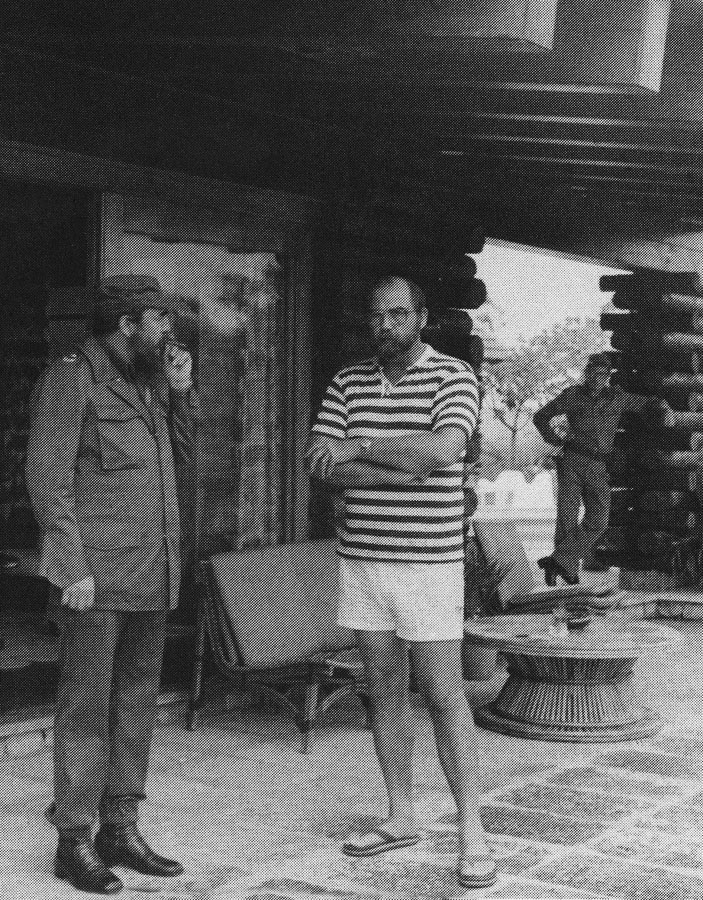
Wayne Smith with Fidel Castro in Havana
Smith thereafter tirelessly dedicated himself to work for normalization of relations between Cuba and the United States as an author and academic (Senior Associate at the Carnegie Endowment for International Peace in Washington; Adjunct Professor of Latin American studies at Johns Hopkins University; and Senior Fellow at the Center for International Policy in Washington).
I first met him in Havana, in May 1996, at the tail-end of my 11,000-kilometer motorcycle journey through Cuba. It was an eye-opening encounter and discussion.
My journey, initiated in late February 2016, had coincided with the shooting down by a Cuban MiG jet of two Cessnas flown by Brothers to the Rescue, resulting in the deaths of four Cuban-American U.S. citizens. On the beach at Cajobabo, near Guantánamo, I’d had a shocking epiphany: that Castro ordered the planes shot down knowing it would result, during election year, in passage of the stalled Helms-Burton Bill that would enshrine the U.S. embargo into permanent law. In short, Fidel wanted the embargo and antagonistic relations!
When I told Smith my revelation, I could hardly believe his reply…
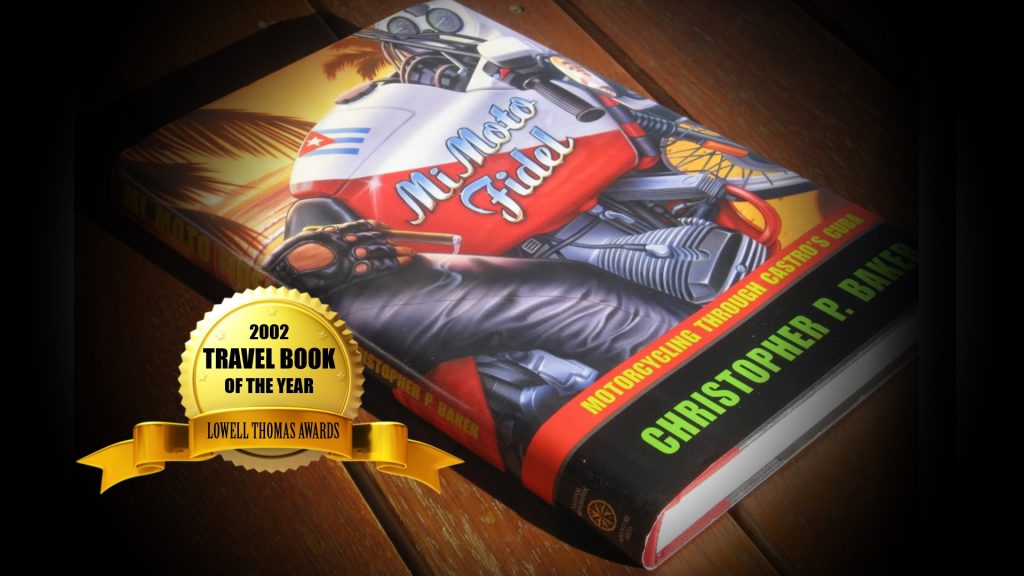
See pp. 216-220 of my award-winning literary travelog, Mi Moto Fidel: Motorcycling Through Castro’s Cuba, for a full explanation of my 1996 exchange with Wayne Smith
‘“The State Department figured that out some time ago,” Smith replied when I met him in Havana three weeks later.
“You’re kidding! Then why doesn’t Washington change its policy?” I asked.
“Neither side wants to,” Smith responded. “The Reagan administration had placed four conditions for improved relations with Cuba,” he explained: a halt to Cuban support for revolution in Central America; withdrawal of Cuban troops from Angola; a reduction of ties with the Soviet Union; and improved human rights.
“Cuba met all these conditions,” Smith continued, “but we kept moving the goalposts. It was impossible for Castro to meet our conditions. Washington wasn’t serious. When Cuba met the new conditions, Bush moved the goalposts again.”
The saw cut both ways. Washington, for example, had extended an olive brand to Castro in 1975, when Secretary of State Henry Kissinger let Cuba know that the Ford administration was considering lifting sanctions and was willing to negotiate the fate of Guantanamo naval base. Extensive secret negotiations were initiated… To prove its good faith, on August 19, 1975, the State Department rescinded the 12-year-old restriction that had kept U.S. companies in foreign countries from doing business with Cuba.’
Smith explained how, just as things looked hopeful, Castro massively escalated Cuba’s military presence in Angola and called a Puerto Rico Solidarity Conference to urge Puerto Rico’s independence, “knowing perfectly well,” claimed journalist Tad Szulc, “that it was an issue calculated to provoked United States anger.”
Smith also outlined how President Carter’s initiatives also dissolved when Castro concocted the Mariel boatlift. Even President Bill Clinton’s early behind-the-scenes efforts to thaw relations with Castro had been nixed by the balsero crisis. And, Smith explained to me, the Reagan administration coincided with–and promoted–the rise of newly-wealthy Cuban-Americans as a political force in Miami and Washington via the ultra right-wing Cuban-American National Foundation, which made rapprochement with Cuba nigh impossible.
Nonetheless, Smith is known for his unrelenting efforts to promote meaningful dialogue and rapprochement between the two countries. He was the leading figure among political activists leading that charge.
(The Brothers to the Rescue incident led to the imprisonment of five Cuban intelligence agents, complicit in the shooting down. The ‘Cuban Five,’ as they became known, had infiltrated Miami-based anti-Castro groups such as Brothers to the Rescue, which in 1995 began buzzing Havana with low-level flights at a time when leading Cuban-American terrorists were planting bombs in Havana’s hotels. It’s important to note that Fidel gave Washington fair warning that he would shoot down the planes if they continued to buzz Havana, as they’d been doing for many months. Given the potential likelihood that they could start dropping bombs, such a move was entirely understandable and acceptable. Smith became a leading advocate for the release of the antiterrorist heroes, who served long, politically-motivated, sentences in U.S. federal prisons. See my blog post about the ‘Cuban Five.’)
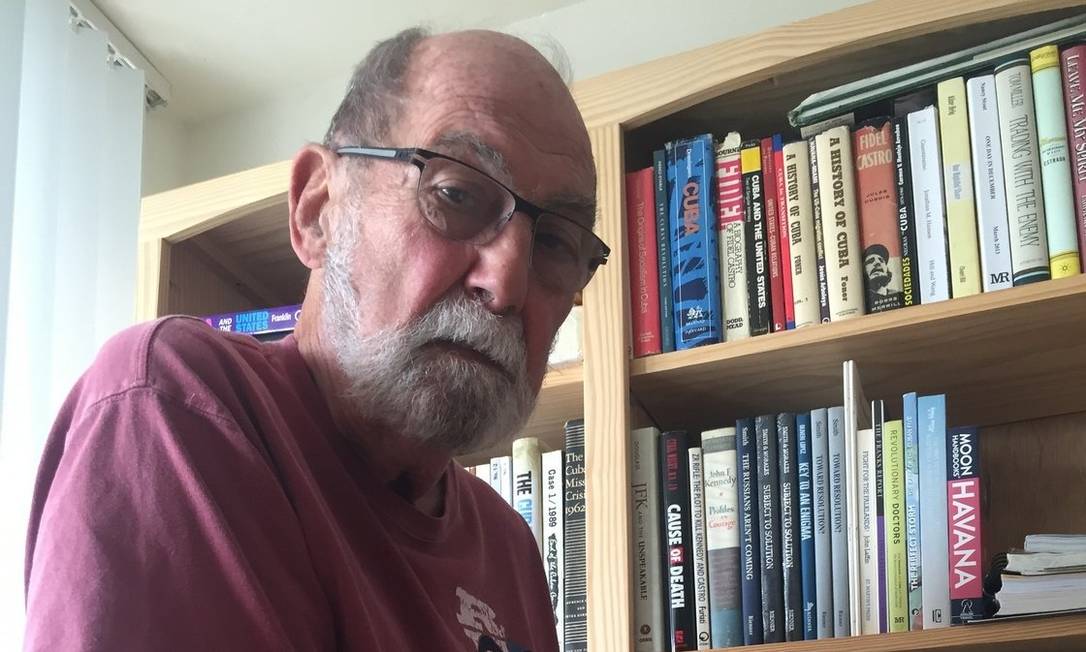
Wayne Smith in his office, with a copy of my Moon Havana guidebook
As years progressed, he and I spoke together on podiums at Cuba-themed conferences in Washington, D.C., and elsewhere, in efforts to end the embargo. (Three decades ago, well before Obama opened Cuba travel up to U.S. citizens, there were relatively few individuals such as myself who had grown familiar with Cuba so thoroughly. I usually gave such presentations alongside policy wonks, such as Wayne, I typically spoke from a travel perspective, but following publication of my 714-page Cuba Handbook, and with as much as six months a year spent in Cuba, I could discuss Cuba with authority from any angle.)
Wayne and I met several more times in Havana. I grew to admire him immensely. And it saddened me greatly to witness his physical decline this past decade.
Appropriately, Smith was present in Cuba alongside Secretary of State John Kerry when the Stars and Stripes was raised for the reopening of the U.S. Embassy in Havana, on July 20, 2015; and, again, as part of President Obama’s entourage during his historic visit to Cuba in March, 2016.

Secretary of State John Kerry at the reopening of the U.S. Embassy in Havana
Smith’s books include Castro’s Cuba: Soviet Partner or Nonaligned? (1985); The Closest of Enemies: Personal and Diplomatic Account of United States-Cuban Relations Since 1957 (1988); Subject to Solution: Problems in Cuban-U.S.Relations (1988); Portrait of Cuba (1991); and The Russians Aren’t Coming: New Soviet Policy in Latin America (1992).


